Internal solutions to Ruben Amorim's right-wing-back dilemma
Geovany Quenda seemed destined to follow Ruben Amorim from Lisbon to Manchester, but now appears Chelsea-bound. Jaydan Kamason and Bendito Mantato present as viable, cost-free alternatives.
Patrick Dorgu provided a blueprint for an Amorim wing-back on Thursday evening as Manchester United secured their progress to the quarter-finals of the Europa League, breezing past Spanish opposition Real Sociedad.
The Dane was a nuisance in the best sense, winning 9 of his 11 ground duels - more than any other player on the pitch. His authoritative occupation of the left-flank caused endless troubles for Sociedad, who struggled to contain his dynamism and aggression as he attacked the space vacated by the Spaniards’ high line.

His mere left-footedness goes a long way in providing balance to United’s attack, with the option should Dorgu choose, to take the ball on the outside and cut it back into the box from the byline - something you don’t get from a right footed left-wing-back, unless they possess exceptional ability to go on the outside - a ‘two-way’ winger.
Questions have been raised by fans and the media regarding the long-term efficacy of United’s deployment of wing-backs - a structural feature that feels foreign to a club whose most successful periods have seen traditional wingers championed as the cornerstone of their attacking exploits - but Dorgu’s early performances in red surely go some way in answering them.
The real question now is this:
Who can do Dorgu’s job on the opposite flank?
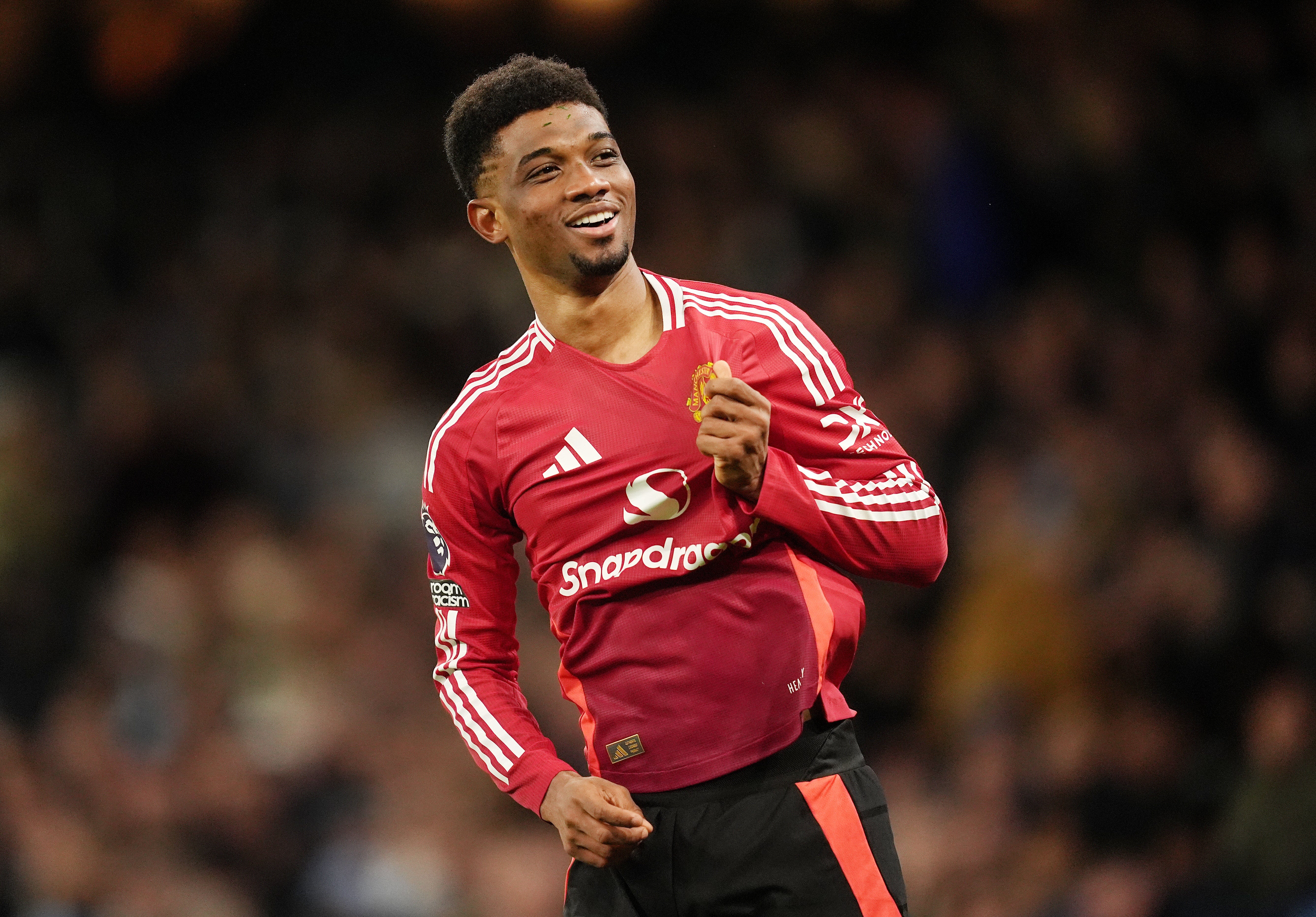
The currently injured Amad showed encouraging signs earlier in the season of being a viable option for the role, though many would argue his creative and technical qualities playing on the inside go somewhat to waste at wing-back.
Many fans had pinned their hopes on United signing 17-year-old Portuguese wonderkid Geovany Quenda from Sporting Lisbon - a young star with a pre-existing understanding of Ruben Amorim’s demands having made his debut under the Portuguese head coach at just 16 - though reports now suggest he’s Chelsea bound.
Even Mazraoui, who initially looked a fantastic addition to Ten Hag’s squad in a more traditional right-back role, now finds himself in a state of awkward limbo whereby no clear role in Amorim’s system plays directly to his strengths.
The Moroccan lacks the bullyish physicality and athleticism required to thrive as a wing-back, and his best performances since the arrival of Amorim have come from the right of United’s back three.
Elite-level pace, strength and stamina are requisite qualities for any Premier League wingback, especially one playing for Ruben Amorim.
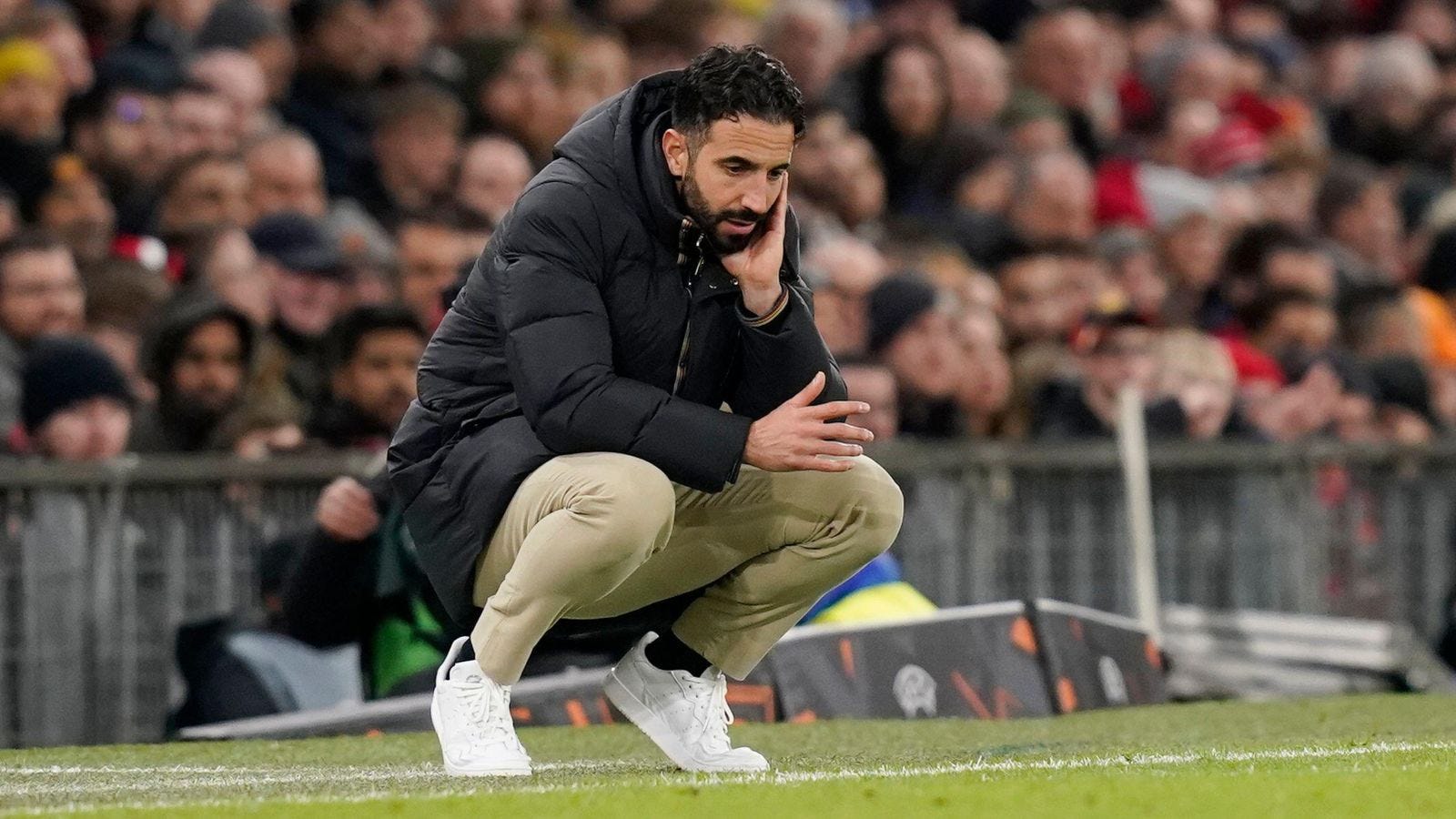
Under the Portuguese head coach, wingbacks are expected to play high and wide, often looking to run the ball to the by-line with the support of their inside #10, and pick out unmarked teammates close to goal, though they must also be prepared to cover obscene amounts of ground when their side are without the ball.
It’s no job for the feint of heart - one that demands of you more running and physical toil than anyone else on the pitch. You need not only an engine fit for a spitfire, but an intuitive understanding of how to conserve and expend energy reserves without burning out prematurely.
A friendship has blossomed on the pitch this season as Jaydan Kamason and Bendito Mantato have linked up on the right flank for United’s youth sides to devastating effect.
The pair have developed an understanding of each other’s movement habits and combine well in the final third as a result. Despite neither profiling as a typical wing-back (if that really exists), I believe both suit Amorim’s vision for the role in different ways.
Jaydan Kamason, 18
Jaydan Kamason - a right-back by-trade - evidenced his capacity for the aforementioned physical demands against Arsenal in the FA Youth Cup in February, as he completed 130 minutes of gruelling football without visibly fatiguing. His 82nd minute wonder-strike to keep United in the tie was accompanied by an assured performance on and off the ball that stood him out well from his peers.
Kamason became the first graduate of United’s Emerging Talent Programme (PTP) to sign a professional contract with the club in December 2023, and has developed steadily since.
The now 18-year-old right-back was brought to the club by Luke Fedorenko, who currently heads up United’s academy recruitment operation. Kamason played briefly for grassroots side Stockport Vikings while trialling for United at the age of 10.
Adam Lawrence spoke positively about Kamason after United’s victory against Arsenal in the FA Youth Cup this season: “It was a tremendous moment for him to score. He’s a fantastic kid and we’re really excited about him.”
Kamason was a bright-spark that day, routinely finding his way into Arsenal’s box either by running onto a pass or carrying it there himself. His physical and technical capacity to take on a defender and drive with the ball through the final third provided United with a constant threat on the right hand side - an outlet in possession that was never more than an opportune switch of play away from causing some real damage.
Kamason - like Dorgu - thrives at running in-behind defensive lines, though he also possesses the necessary passing ability to play his teammates into those spaces from deep. His first of two assists against Chelsea in the third round of the FA Youth Cup demonstrated this well.
Kamason paused to weigh up his options, before floating a wonderfully weighted ball over the top for the prolific Chido Obi to latch onto, the Dane doing well to out-muscle his defender and apply the necessary finish to equalise for United, who would go on to win 5-1.
Kamason’s second assist that evening evidenced his crossing ability as he delivered a pin-point outswinger to find the head of Gibraltar international James Scanlon. Kamason being a handy and reliable crosser is a relatively new but of course welcome addition to his repertoire.
The 18-year-old is a defensive stalwart, using a combination of athleticism and anticipation to provide United with a stubborn blockade on the right-flank. This area of Kamason’s game has always been strong, with the majority of his earlier years until under-16 level spent playing as a centre-back.
Several times this season has Kamason been relied on to make crucial last-ditch tackles, made possible by his impressive pace over long distances. One that comes to mind is this outstanding effort to deny Newcastle’s #7 from scoring on the break:
The right-back embarks on a gut-busting sprint from Newcastle’s half to his own box, before putting in a well-measured right foot to dispossess the attacker and neutralise the threat (video courtesy of Youth Football Highlights via YouTube).
Kamason certainly profiles more similarly to Dorgu than a Quenda for example, as a natural full-back playing in a more advanced role. This is fine, but Amorim at Sporting often deployed a somewhat asymmetrical wide pairing, with one wing-back closer resembling a full-back, and the other taking the shape of a winger.
Bendito Mantato, 17
Perhaps the most convincing Quenda-imitator at United, Manchester-born Bendito Mantato possesses many of the traits that makes the Sporting star so desirable, and importantly a good fit for the right-wing-back role.
Originally recruited to the club at the pre-academy level (under-9), Mantato is a first-year scholar, but has been a mainstay for United’s under-18s for two years now. Mantato signed his scholarship deal last summer, convinced by the club’s incentives of a first-team pathway despite discussions with Arsenal, who were keen to snap up the highly rated youngster.
Unlike Kamason, Mantato is a left-footer, and presents as more of a traditional winger, who spends the majority of his minutes on the right under manager Adam Lawrence. The same is true for Quenda, who rose through the ranks at Sporting and Portugal’s youth sides playing as a natural right-winger.
For England’s youth sides however, Mantato has predominantly been utilised at left-back, as well as during a brief stint for United’s under-18s when he first made the jump as an under-16 last season. This experience playing in a more defensive role can only serve to benefit him in the long-run, especially if he’s tasked with playing as a wing-back for United’s first-team.
Vitally, Mantato profiles as a ‘two-way’ winger - adept at running the ball on the inside and outside, compensating for his ‘wrong-footedness’ as a potential right-wing-back.
As touched upon earlier, the role in question demands the utmost physical and athletic capacity to be a dominant wide presence throughout a 90 minute game - something Mantato too possesses. He’s unsuspectingly strong in duels given his relatively slender frame, much of which comes down to great core strength. His pace and mobility are also impressive, allowing him to burst past defenders and pose a real threat in 1v1 situations.
Yesterday the 17-year-old was handed his first under-21 start by Travis Binion, as United faced West Bromwich Albion in the PL2. Mantato played in his preferred position at right-wing, and stood out as United’s best player in the first-half.
His first contribution of the game, an assist for Welsh striker Gabriele Biancheri, demonstrated the value he brings in a creative capacity playing on the right for United.
Tyler Fletcher provided the pre-assist for Mantato, the winger running onto the ball close to the byline and delivering a first-time cross with his weaker right foot to Biancheri, who finished past West Brom’s keeper from point-blank range.
This is the exact type of goal Ruben Amorim wants his Manchester United side to score - Fletcher in this scenario takes on the role of the inside-right #10, supporting the wing-back (Mantato) who goes on the outside to provide the cross.
Mantato is a handful for defenders, with a twitchiness that makes his movements and intentions hard to read. Highly mobile, the recently turned 17-year-old uses quick changes of pace and direction to wrong-foot defenders before bursting past them.
His second major contribution during United’s 5-1 thrashing of West Brom yesterday evening - an impressive solo goal - evidenced this unpredictability.
The pair responsible for United’s first goal would combine again here, but with a role reversal that saw Biancheri turn creator for Mantato.
His ambiguous body positioning made it difficult for West Brom’s defender to predict the next move. This is the value of a ‘two-way’ winger - defenders are far less likely to commit to a tackle if they can’t reliably anticipate whether you’ll take the ball on the inside or out.
As a result, Mantato was able to nimbly cut the ball onto his stronger left foot, before finishing high at the near-post.
"He was in a really good place. He is in a really good place now. Obviously, he's got a really good chance. The football club thinks a lot of him. Brilliant mentality", said under-21s head coach Travis Binion to MUTV after the game last night.
As emphasised by Binion, Mantato has admirers amongst senior staff at United, who are keen to provide the youngster with a clear pathway to United’s first-team.
The 17-year-old spent much of the winter period out injured, but could be picking up form at just the right time to be handed a first-team opportunity.
Both Mantato and Kamason have trained with United’s first-team squad on a number of occasions, and are well placed to provide an answer to Amorim’s RWB dilemma, should the opportunity be presented to them.
If either of them were to prove capable of performing at a high level in this role for United’s first-team, it would represent a victory for Amorim and INEOS, who could allocate funds that would have been spent on a wing-back elsewhere in the squad.


Nice work once again Fin. Quick question with Fabrizio confirming the Quenda to Chelsea story, do you feel the chances for Kamasson or Mantato to get a chance in the first team (either this season or on pre-season) increase or do you think the club want a signing at RWB regardless of how well these 2 are performing at youth level? Side note any injury issues that we may need to be concerned about regarding Mantato?